The Heart of Electric Running Boards: A Deep Dive into Side Step Motor Principles, Manufacturing, and Troubleshooting
In the premium SUV, truck, and off-road modification markets (such as Jeep Wrangler, Ford F-150, RAM, and Toyota Tundra), electric running boards (power side steps) have transitioned from luxury add-ons to essential upgrades. They offer the perfect balance of convenience for passengers and high ground clearance during rugged driving.
However, while buyers often obsess over the material of the step panel, the true unsung hero of the entire system sits underneath the chassis: the electric running board motor. Today, we will pull back the curtain on this heavy-duty automotive component to explore how it works, how it is manufactured to survive extreme environments, and how to choose the right one for your business or vehicle.
1. How Does an Electric Running Board Motor Work?
An electric side step motor typically consists of a high-torque DC permanent magnet motor or a Brushless DC (BLDC) motor integrated with a compact, high-ratio worm gearbox.
Its smart operation relies on three core mechanisms:
Signal Linkage: When a car door opens, the Vehicle Control Unit (ECU) sends power to the motor, triggering a forward rotation that pushes the step down and out via a mechanical linkage.
Automatic Retraction: When the door closes, the controller reverses the current direction, causing the motor to spin backward and hide the step neatly under the rocker panels.
Smart Anti-Pinch Safety: The control system continuously monitors the motor's current consumption. If the running board hits an obstacle (such as a passenger's foot, a high curb, or thick ice accumulation) while extending or retracting, resistance spikes the electric current. The ECU detects this instant surge and immediately cuts or reverses the power, preventing injury or vehicular damage.
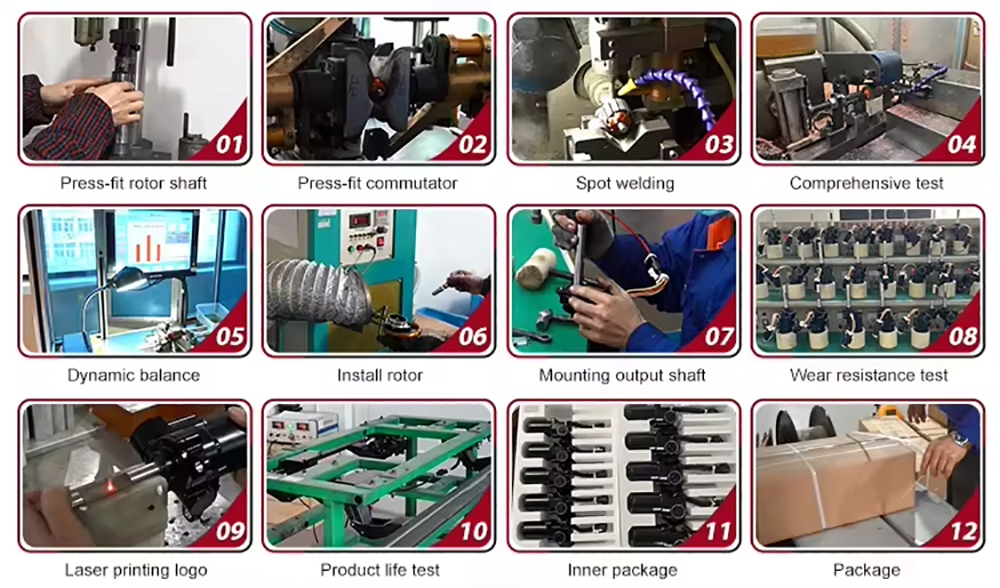
2. The 5-Step Automotive-Grade Manufacturing Process
Because they are mounted under the chassis, these motors face a brutal operating environment. A premium electric running board motor must undergo a highly automated, strict production flow to ensure reliability:
Step 1: Sub-Assembly Component Production
The Stator: Copper wire is precisely wound onto laminated steel cores using high-speed CNC winding machines, followed by dip-varnishing and baking to optimize insulation and moisture resistance.
The Rotor: The steel rotor shaft is precision-machined with a built-in worm gear thread. The entire assembly passes through an automatic dynamic balancing machine to trim off micro-grams of weight, preventing high-frequency vibration during operation.
The Gearbox: Housings are die-cast from premium aluminum alloy. Inside, the mating worm wheel is typically molded from wear-resistant copper or high-strength lubricated nylon (e.g., PA66+MoS2) to guarantee silent yet rugged power transmission.
Step 2: Precision Final Assembly
Automotive-grade EMQ (Electric Motor Quality) bearings are pressed onto the rotor. The magnetized rotor is precisely guided into the stator using specialized jigs. The gearbox is filled with heavy-duty, wide-temperature grease before the worm wheel is perfectly meshed with the motor shaft.
Step 3: High-Standard Weatherproofing (The Crucial Step)
Achieving an IP67 or IP68 waterproof rating is what separates automotive-grade motors from cheap industrial alternatives. Automated dispensing robots apply RTV silicone gaskets along all housing seams, and the power cord root is over-molded with protective resin to block water capillary action.
Step 4: End-of-Line (EOL) Performance Testing
Before packaging, the manufactured motors must pass rigorous downstream tests:
Electrical Safety: Hipot (high potential) testing, insulation resistance, and surge tests.
Load & Torque: Testing forward/reverse rotation to monitor RPM, current draw, and stall torque.
Airtightness Test: Utilizing an air leakage tester to pressurize the motor cavity, ensuring zero moisture can seep in during deep water wading or high-pressure car washes.
Step 5: Laser Etching & Traceability
Each motor receives a permanent, laser-etched QR code containing its unique serial number, production date, and batch data. This allows for absolute quality tracking throughout its lifecycle.
3. Troubleshooting: When Should You Replace the Motor?
Being exposed to road debris, mud, rain, and snow, power side step motors can eventually wear down. Watch out for these three red flags:
The Step is Completely Unresponsive: Often caused by worn carbon brushes, burned internal coils, or a breached wire harness plug that allowed water corrosion to kill the electrical contact.
Slow, Stuttering, or Weak Movement: This usually indicates that the gearbox lubricant has dried out, the gears have worn flat, or road grime has jammed the external linkage hinges, causing extreme load on the motor.
Loud Grinding or Squealing Noises: A clear symptom of dry or damaged internal bearings, or severe gear slippage inside the housing.
4. Sourcing & Buying Guide for B2B and B2C Buyers
Whether you are an auto parts importer looking to stock inventory or an off-road enthusiast upgrading your rig, keep these tips in mind:
Verify the IP Rating: Never compromise on weather sealing. Demand IP67/IP68 certification to ensure the motor can withstand road salt, winter slush, and pressure washers.
Look for Materials, Not Just Price: Cheap aftermarket options often use low-grade grease that freezes in winter or budget plastic gears that strip under load. Choose suppliers who offer traceable QR codes and use copper or reinforced nylon gears.
Maintenance Tip: To extend the life of your motor, spray the external running board mechanical hinges with a high-quality penetrant lubricant every six months to lower the torque load on the motor.
As a premier automotive component manufacturer, we specialize in high-torque, weatherproof electric running board motors built to OE specifications. Contact our engineering team today to request a catalog, technical data sheets, or wholesale bulk pricing!


